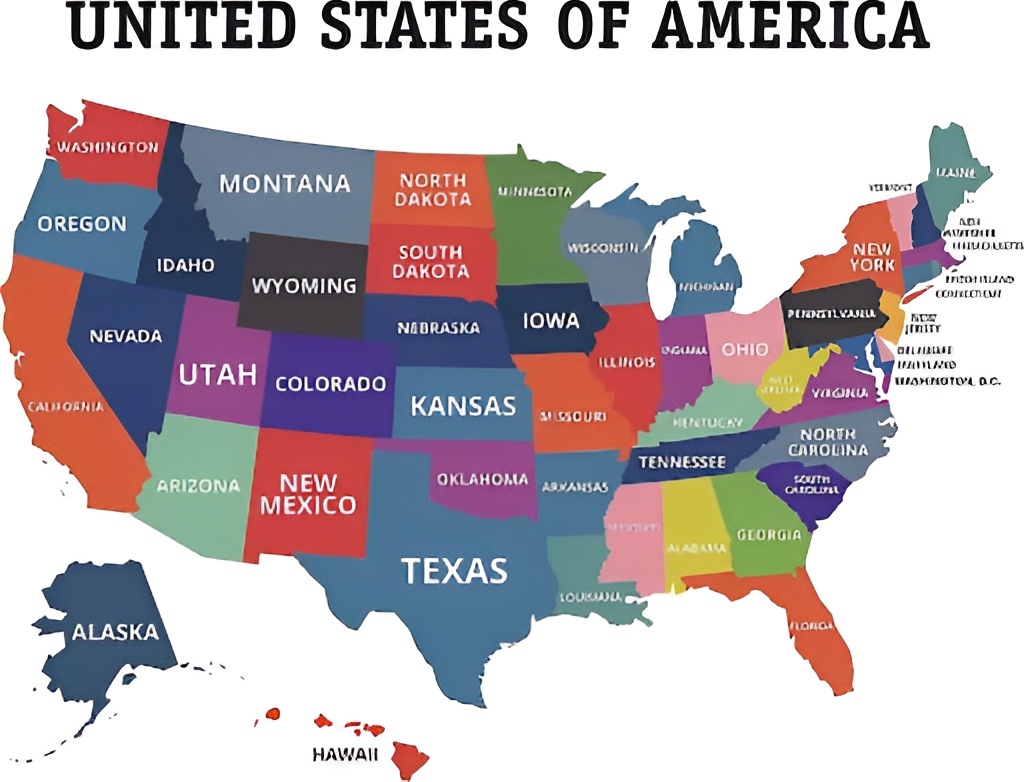
When people talk about the United States, one of the most common questions that comes to mind is simple: How many states are in America?
The clear answer is 50 states. But behind this number lies a fascinating story of history, geography, and culture. In this guide, we will break it down in simple words so that you fully understand not just the number, but also what makes these states important.
Why Does America Have 50 States?
The United States did not start with 50 states. When the country was founded in 1776, there were only 13 original colonies that became the first states. Over time, as new areas were settled, purchased, or annexed, more states were added to the Union.
The last two states to join were:
- Alaska in 1959
- Hawaii in 1959
This made the official count reach 50 states, and it has remained the same ever since.
Common Confusion: 50 or 52 States?
Many people mistakenly think America has 52 states. This confusion usually comes from the fact that the U.S. also has territories, such as:
- Puerto Rico
- Guam
- U.S. Virgin Islands
- American Samoa
These regions are part of the United States, but they are not official states. That’s why the correct answer is still 50 states, not 52.
The 50 States of America (Quick List)
Here is the complete list of all 50 states in alphabetical order:
Alabama, Alaska, Arizona, Arkansas, California, Colorado, Connecticut, Delaware, Florida, Georgia, Hawaii, Idaho, Illinois, Indiana, Iowa, Kansas, Kentucky, Louisiana, Maine, Maryland, Massachusetts, Michigan, Minnesota, Mississippi, Missouri, Montana, Nebraska, Nevada, New Hampshire, New Jersey, New Mexico, New York, North Carolina, North Dakota, Ohio, Oklahoma, Oregon, Pennsylvania, Rhode Island, South Carolina, South Dakota, Tennessee, Texas, Utah, Vermont, Virginia, Washington, West Virginia, Wisconsin, Wyoming.
Each state has its own capital, flag, laws, and culture, but together they form one country.
Fun Facts About U.S. States

- Largest State: Alaska – it is bigger than the next three largest states combined.
- Smallest State: Rhode Island – tiny in size, but full of history.
- Most Populated State: California – home to nearly 40 million people.
- Least Populated State: Wyoming – less than 600,000 residents.
- Newest State: Hawaii – joined the Union in August 1959.
How States Work in the U.S.
Each state has its government and laws, but they also follow the federal system of the United States. This means states can decide many local rules, but they are still part of one united country.
For example:
- Education systems vary from state to state.
- Driving laws may have different speed limits.
- Taxes can also be higher or lower depending on where you live.
This makes traveling across states an interesting experience, because while you are in one state, you also notice many differences in culture, food, and lifestyle.
Why Knowing the States Matters
Understanding the 50 states is more than just a geography lesson. It helps in:
- Travel planning – deciding where to go and what to see.
- Education – important for students to learn history and civics.
- Business – many companies operate differently depending on state laws.
- Cultural knowledge – knowing that each state has its own unique identity.
Quick Timeline of State Additions
- 1776 – 13 original states.
- 1803 – The Louisiana Purchase expanded the U.S. westward.
- 1845 – Texas joined the Union.
- 1896 – Utah became a state.
- 1959 – Alaska and Hawaii completed the list at 50.
This timeline shows how America grew over nearly 200 years.
Final Thoughts
So, the next time someone asks, “How many states are in America?” you know the clear and simple answer: 50 states. From the first 13 colonies to the most recent additions of Alaska and Hawaii, each state has played an important role in shaping the United States as we know it today.
America’s strength comes not only from its size but also from the diversity of its states. Each one adds a unique piece to the puzzle that makes the U.S. a truly remarkable nation.
